








Who is Liable for Injuries on Public Transportation?
Sep 09,2026
No image available.
Many people rely on public transportation to get around. For some, it is the way they get to work or school on a daily basis. Other people might only use public transportation sporadically. Overall, Americans took 10.4 billion public transport rides in 2016. Those trips include rides on buses, trains, subways, cable cars and light rails.
Generally, public transportation is very safe. In fact, the American Public Transportation Association found that taking public transport can reduce a person’s chance of being in an accident by more than 90%. However, that doesn’t mean accidents involving public transportation never happen. Buses, trains and other modes of public transport are still operated and maintained by human drivers who make mistakes. There can also be issues, such as mechanical failures, that contribute to accidents.
So, what happens if you are injured while taking public transportation? Who is liable, and how can you recover compensation?
First off, liability depends upon fault. California is an at-fault state, so liability for damages will fall to the at-fault party. It is important to note that public carriers, such as buses and trains, are held to a higher standard of care than other drivers. These transporters are required to exercise the highest level of care to ensure their passengers’ safety. Thus, even a minor act of negligence on the part of a public transportation provider may be enough to establish their liability.
A “common carrier” is any entity that transports people from one place to another. It can include buses, trains, taxis, and even amusement park rides in some cases. If they transport passengers for a fee and are open to the public, they are considered “common carriers.”
Common carriers are held to a higher standard than ordinary drivers. This standard applies during transport, and usually not in loading docks or pre-transit areas. For instance, the standard might not apply in a maintenance yard where multiple buses are being serviced.
This “higher standard” requires drivers and the company that hires them to:
Some examples of public transportation negligence that might result in injury include:
Sudden stops can cause standing passengers to be thrown to the floor and cause seated passengers to strike the seat back in front of them.
Drivers who violate traffic laws can receive traffic citations. Companies should not pressure drivers by setting unrealistic schedules or overlooking violations.
In some cases, bus companies are responsible for maintaining the stops or locations. If a company knows a location is hazardous, for instance, if the light is out and the area is dark, drivers and the company could be responsible for the results.
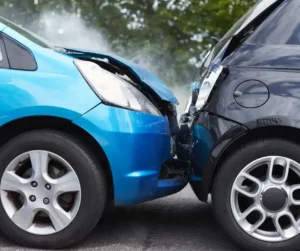
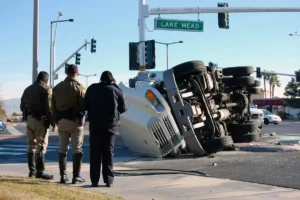
Drivers who crash into another vehicle or object due to negligence may be liable for resulting injuries. The transportation company may also be responsible when the driver was acting within the scope of employment.
Common carriers are expected to maintain their equipment in top condition. This includes ensuring that riders are safe while riding in and on their buses, trains, and airplanes. If something cannot be repaired while the vehicle is in operation, it should be marked, and the public should be unable to use it.
Doors and windows should be operational and clearly marked. As with other broken equipment, if something cannot be readily repaired, people should be unable to use it. Vehicles missing emergency exits should be taken out of service immediately.
Often, even city bus companies and taxi fleets have other agencies maintain and service their vehicles. These companies are equally liable for working on common carriers. The primary company is liable for any harm caused by its subcontracting company.
If the driver of the vehicle is the one who was negligent, you might have a claim against the at-fault driver, as well as the transport company or government agency responsible for the vehicle. If your injury was the result of poor maintenance or failure to inspect the vehicle, the entity responsible for these tasks may be liable for your damages.
One important thing to note is that if you believe you have a claim against a publicly owned transportation company, your claim will be subject to the requirements for any liability case against a government agency.
In California, if the bus or other common carrier is owned by the city, county, or state, your claim is controlled by the Government Claims Act (CA Gov. Code § 810–996.6). You must file an administrative claim against the proper government entity within six months of the accident before you can sue for damages.
The administrative form will ask for details about the accident, your name and address, and the amount of damages you’re requesting. The agency has 45 days to answer. If they do not answer, your claim has been denied, and you may continue your legal action. You only have six months from the date of the denial letter to file your lawsuit.
If they do answer, you and your attorney may still need to negotiate with the agency for your damages.
Additionally, public entities generally have some immunities that do not pertain to private transportation companies—another reason you should seek assistance from a personal injury attorney for this type of case.
Finally, it is also worth noting that you cannot receive punitive damages in a case against a public entity in California. You will only be able to make a claim for compensatory damages.
Knowing what you’re allowed to request and what you’re entitled to receive, especially in the short window after your accident, can be challenging for anyone not versed in the law. Your best course of action is to contact a personal injury attorney and get legal assistance whenever a public carrier caused your accident.
If you have been injured while taking public transportation, here are some steps to take to help build your case:
Take photos and/or videos to record the incident. Be sure to get photos of any damage to the vehicles involved, as well as photos of your injuries.
Get the information of everyone involved in the accident, as well as the information about the public transportation vehicle (bus number, driver name, etc.).
Speak with any witnesses to the accident, and make sure you get their contact information.
Seek medical treatment as soon as possible. If first responders come to the scene, it is a good idea to allow them to evaluate you. If they recommend you go to the hospital right away, you should follow their advice. If immediate treatment is not necessary, schedule an appointment with your primary care provider to be evaluated as soon as possible.
Contact an experienced personal injury attorney. Claims involving public transportation tend to be complex, so it is important to seek the help of a personal injury attorney who can help you navigate the claim process.
“If you have been injured while taking public transportation, consult with a personal injury attorney right away to learn about your options,” said Attorney Walter Clark, founder of Walter Clark Legal Group.
Our firm has been handling personal injury cases throughout the California Low Desert and High Desert communities for over 30 years. With a 95% success rate, the personal injury attorneys at Walter Clark Legal Group will fight to hold those responsible for your loss accountable and win compensation to cover medical bills, lost wages, and pain and suffering. If you have been injured in an auto accident and want to discuss your legal options, contact us today for a free consultation with an experienced personal injury lawyer. We have offices in Indio, Rancho Mirage, Victorville, El Centro, and Yucca Valley, and represent clients throughout the entire California Low Desert and High Desert communities.
DISCLAIMER: The Walter Clark Legal Group blog is intended for general information purposes only and is not intended as legal or medical advice. References to laws are based on general legal practices and vary by location. Information reported comes from secondary news sources. We do handle these types of cases, but whether or not the individuals and/or loved ones involved in these accidents choose to be represented by a law firm is a personal choice we respect. Should you find any of the information incorrect, we welcome you to contact us with corrections.
 Communities We Serve
Walter Clark Legal Group helps injured people and their families in the Southern California desert communities of:
Past results do not guarantee future outcomes, and each case is different. We offer free case evaluations, and no attorney’s fees are owed unless we recover compensation; clients may be responsible for case-related costs and expenses. Recognitions by third-party legal directories are based on their own criteria and do not imply specialization or certification. Descriptions of practice areas do not constitute certification or specialization unless expressly stated. We are not affiliated with, endorsed by, or approved by any government agency.
Walter Clark Legal Group